
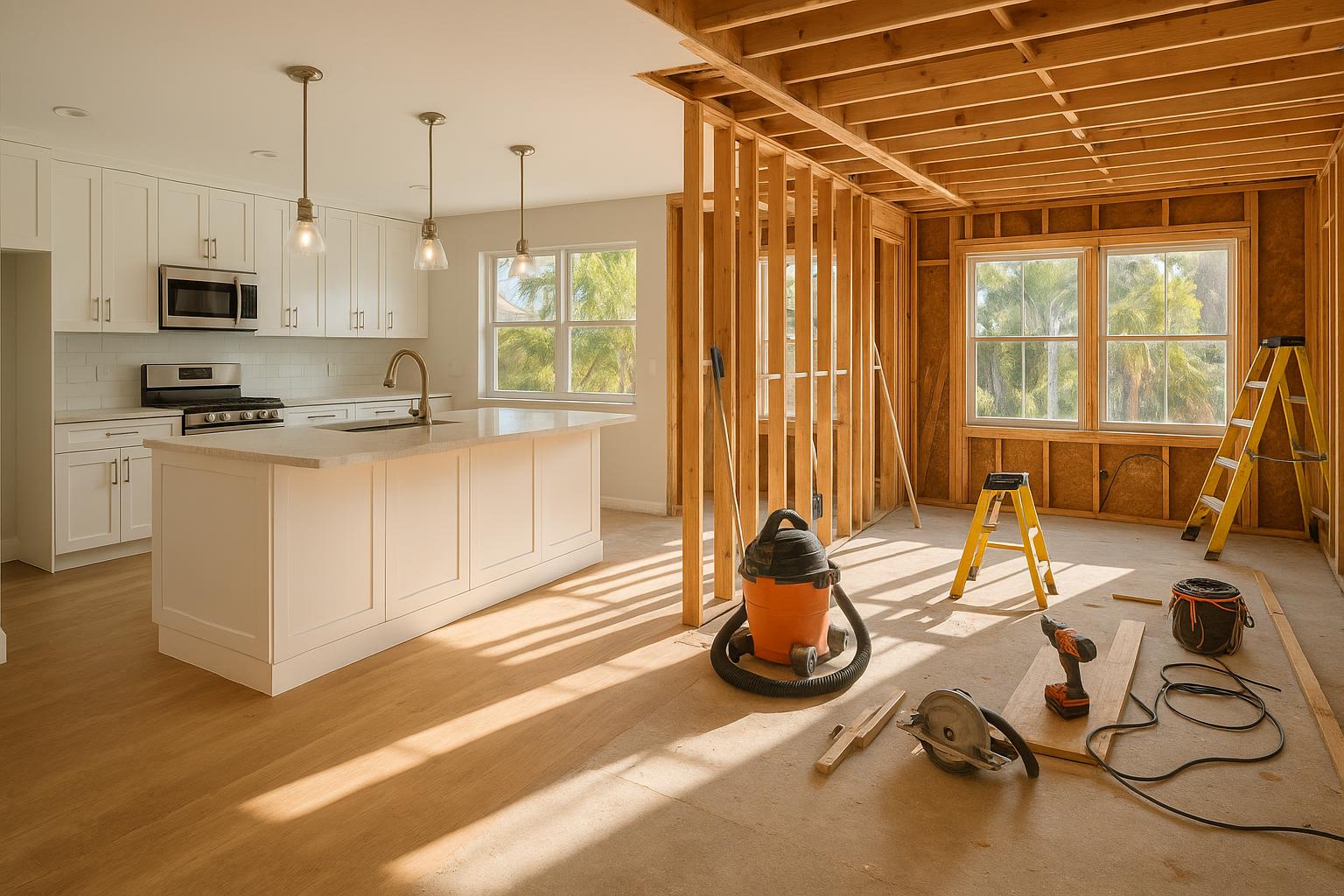
Why Whole-Home Remodeling Feels So Overwhelming
You know the kitchen needs updating. The bathrooms are stuck in the 1990s. The flooring throughout the house has seen better days. When multiple rooms need attention at once, many Fort Lauderdale homeowners face a difficult question: do you tackle everything at once, or stretch it out over years?
A whole-home remodel is one of the biggest investments you'll ever make, and it's natural to feel uncertain about where to start. The good news is that with a clear plan and the right team, renovating your entire home doesn't have to be chaotic. In fact, doing it strategically can save you money, reduce disruption, and deliver a more cohesive result than piecemeal updates spread over a decade.
Step 1: Assess What Actually Needs to Change
Before you start picking out tile samples or browsing cabinet styles, walk through your home with a critical eye. Make a list of every room and area that needs work, then categorize each item into three groups:
- Must-do: Structural issues, outdated electrical or plumbing, water damage, safety concerns, or anything that affects your daily quality of life.
- Should-do: Cosmetic updates that would significantly improve the look and function of a space, like replacing worn flooring or updating an awkward bathroom layout.
- Nice-to-have: Upgrades that would be wonderful but aren't urgent, such as adding a built-in bookshelf or upgrading to a rain showerhead.
This exercise helps you see the full scope of work and makes it easier to prioritize when budgets and timelines come into play.
Step 2: Set a Realistic Budget (Then Add a Buffer)
One of the biggest mistakes homeowners make is underestimating costs. A whole-home remodel in Fort Lauderdale can range widely depending on the size of your home, the scope of work, and the materials you choose. Here are some budgeting principles that will keep you grounded:
- Get multiple estimates before committing to any contractor. Understand what's included in each quote and what might trigger additional costs.
- Allocate 15-20% of your total budget as a contingency fund. Older South Florida homes often reveal surprises behind walls, like outdated wiring, hidden water damage, or plumbing that doesn't meet current code.
- Prioritize spending on high-impact areas. Kitchens and bathrooms consistently deliver the best return on investment, both in daily enjoyment and resale value.
- Don't forget permits. Many remodeling projects in Broward County require permits, and skipping them can create serious problems when you sell your home.
Step 3: Decide on Phasing vs. All-at-Once
This is where strategy really matters. There are two main approaches to a whole-home remodel, and each has trade-offs.
The All-at-Once Approach
Renovating everything simultaneously is faster overall and can be more cost-effective since your contractor can coordinate trades efficiently. However, it usually means you'll need to move out temporarily. For homeowners in areas like Davie, Plantation, or Hollywood who have family nearby or can rent short-term, this can be the smartest option.
The Phased Approach
Phasing your remodel lets you stay in your home and spread costs over time. A common sequence is to start with the kitchen, then move to bathrooms, followed by flooring and common areas, and finish with exterior renovations. The downside is that the overall timeline is longer, and you'll be living in a construction zone on and off for months.
Neither approach is universally better. The right choice depends on your budget, your living situation, and your tolerance for disruption. A good remodeling contractor will help you map out a phasing plan that makes sense for your specific circumstances.
Step 4: Choose One Design Direction
When you're updating multiple rooms, design consistency matters. That doesn't mean every room has to look identical, but there should be a cohesive thread running through your home. Consider these elements:
- Flooring: Using the same flooring material throughout main living areas creates visual flow and makes smaller homes feel larger. This is especially effective in Fort Lauderdale ranch-style homes and mid-century layouts.
- Color palette: Choose a base palette of two or three neutral tones, then add personality through accent colors in individual rooms.
- Hardware and fixtures: Consistent finishes on cabinet hardware, faucets, and light fixtures tie everything together without being monotonous.
- Tile work: Custom tile in kitchens and bathrooms is where you can express individual style while still connecting to the broader design language of your home.
Working with one remodeling team for the entire project helps maintain this consistency. When different contractors handle different rooms at different times, the result can feel disjointed.
Step 5: Communicate Clearly and Often
The number one complaint homeowners have about remodeling projects isn't cost overruns or delays. It's poor communication. Before your project begins, establish clear expectations with your contractor about:
- How often you'll receive progress updates
- Who your main point of contact will be
- How change orders will be handled and documented
- What the expected timeline looks like, including potential delays
- How the work site will be managed and cleaned up daily
At Refine Exterior Remodeling, we've found that honest, consistent communication is what separates a stressful renovation from an exciting one. When homeowners understand what's happening and why, they feel in control of the process rather than at its mercy.
Step 6: Plan for Life During Construction
Living through a remodel requires some practical planning. Here are tips from homeowners who've been through it:
- Set up a temporary kitchen with a microwave, mini fridge, and coffee maker if your kitchen is being renovated. A folding table in the dining room or garage goes a long way.
- Seal off work areas with plastic sheeting to contain dust. Your contractor should do this, but it helps to confirm the plan upfront.
- Secure valuables and fragile items in rooms that aren't being worked on.
- Talk to your neighbors. Construction noise and contractor vehicles are part of the process, and a friendly heads-up builds goodwill, especially in close-knit neighborhoods in Wilton Manors or Oakland Park.
The Payoff Is Worth the Process
A whole-home remodel is a significant undertaking, but the result is transformative. Instead of living in a house that needs constant patching and workarounds, you end up with a home that works beautifully in every room. For Fort Lauderdale homeowners dealing with aging construction, humidity-related wear, and evolving family needs, a well-planned renovation can add years of comfort and substantial equity to your property.
If you're considering a large-scale remodel and aren't sure where to begin, start with a conversation. At Refine Exterior Remodeling, we help homeowners across Fort Lauderdale and surrounding communities develop a clear, phased plan that respects their budget and their sanity. Reach out to us for an honest assessment of your project, and let's build a roadmap together.